
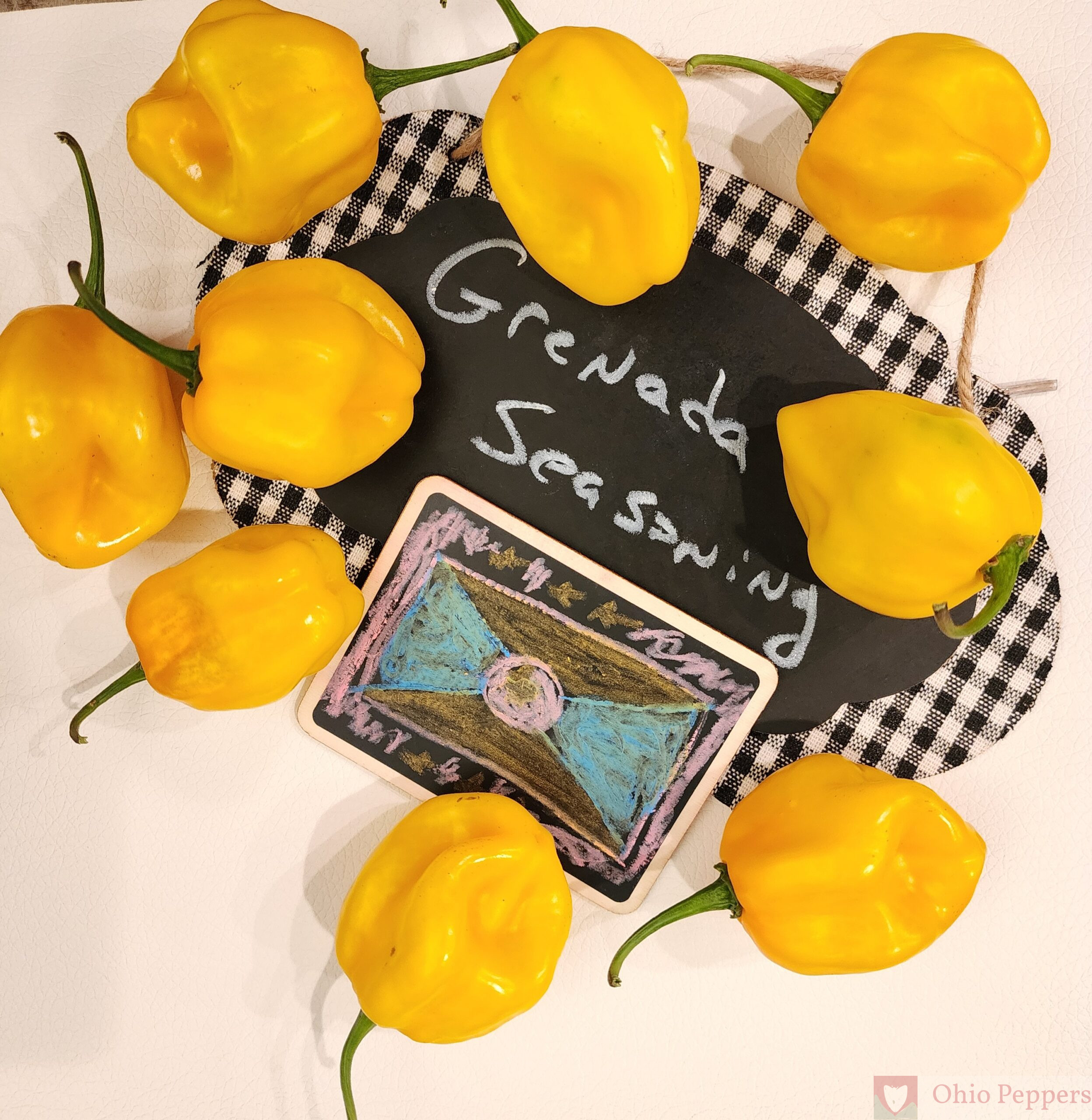


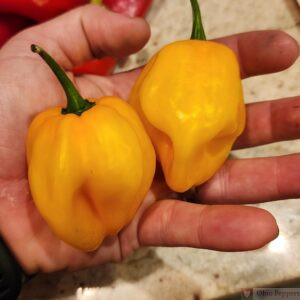

Grenada Seasoning
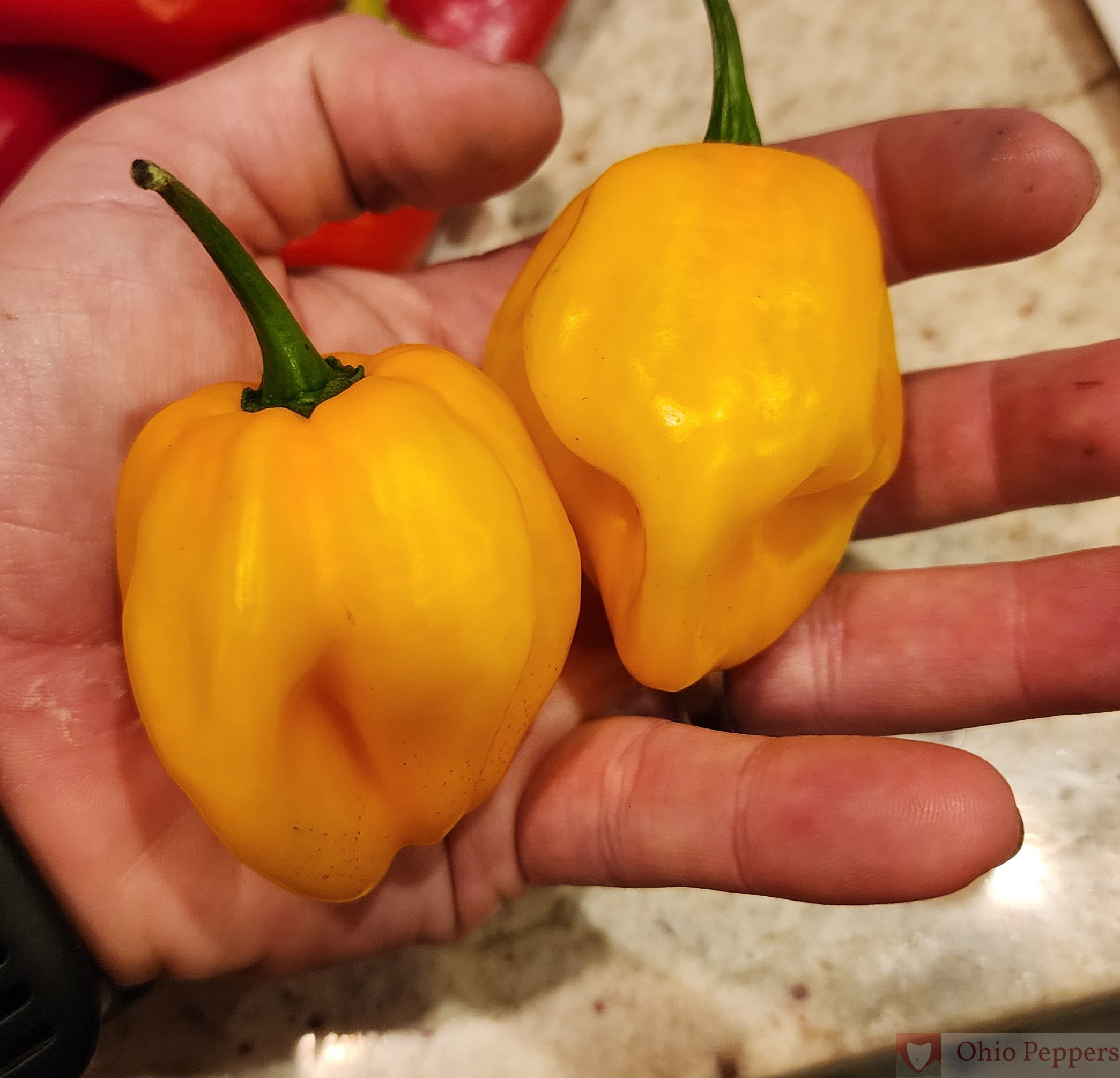
This pepper has an interesting split between the flesh and the center. The outer flesh is sweet. The core carries more heat.
Unlike the straightforward heat of the Cayenne or the mildness of the Bell Pepper, Grenada Seasoning gives you a little of both.
Scoville Heat Units (SHU)
Grenada Seasoning is often listed around 15,000 SHU. I would take that number with a grain of salt.
The outer part of the fruit is surprisingly sweet. There is virtually no heat there. Most of the heat is in the pith/placental material around the seeds.
In my “expert” opinion, it barely reaches Jalapeno heat. I am not getting anything close to 15K.
This pepper is a C. chinense, the same species as habanero. It has a lot of that fruity chinense flavor. Just without the big heat.
Culinary Uses
The sweet outer flesh works well in salads, salsa, or just eaten fresh.
Leave more of the center in if you want some heat. That works well in sauces, stews, and marinades.
The flavor is tropical with a little citrus. It gives you a lot of the Habanero flavor without beating you up with heat.
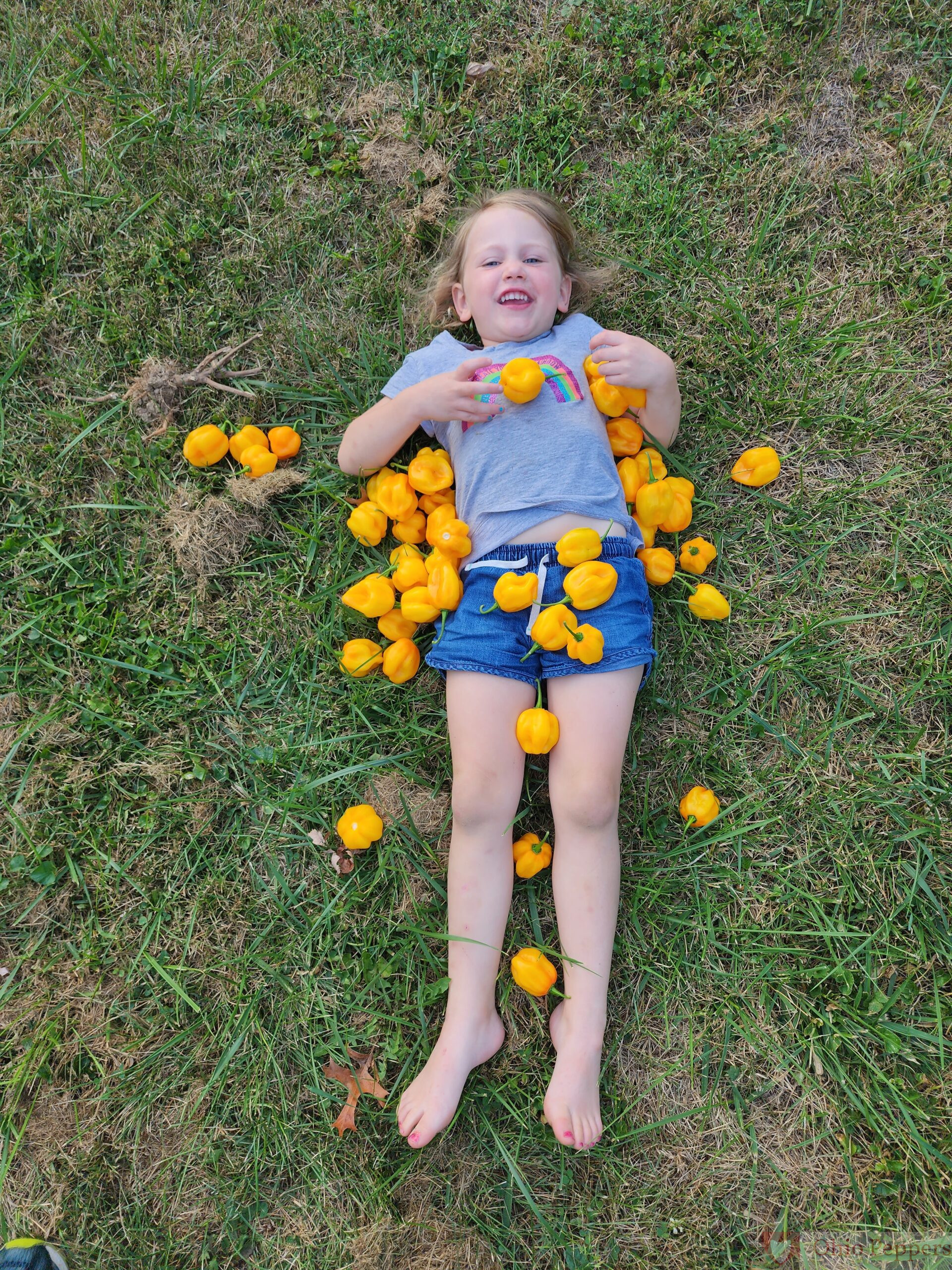
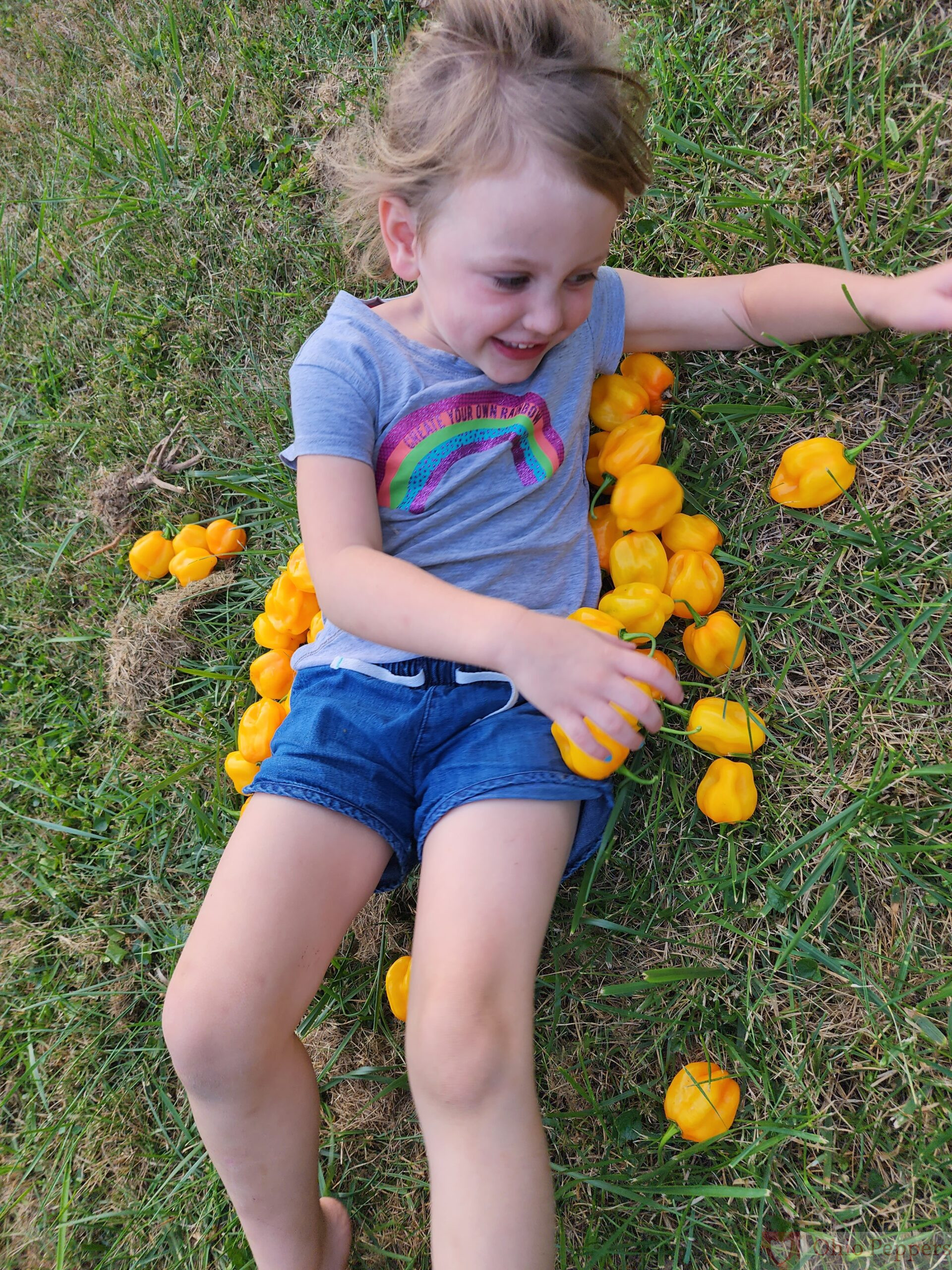
As a personal aside: Our 3-year-old eats the peppers as a sweet snack. Outside only, not the core! This is a kid who does not eat pepperoni on pizza because it is too spicy.
Growing Requirements
Start the seeds in a warm environment with a quality seed-starting mix. I use Burpee seed-starting mix from Menards. Sorry, non-Midwesterners!
Keep the mix evenly moist while the seeds germinate. Give the seedlings plenty of light once they come up.
Do not rush them outside. Final transplant should happen after the threat of frost is over. Better yet, wait until nighttime temperatures are consistently 50°F or higher.
If they were started indoors, harden them off first.
Once outside, give them full sun, regular water, and decent drainage.



Reviews
There are no reviews yet