
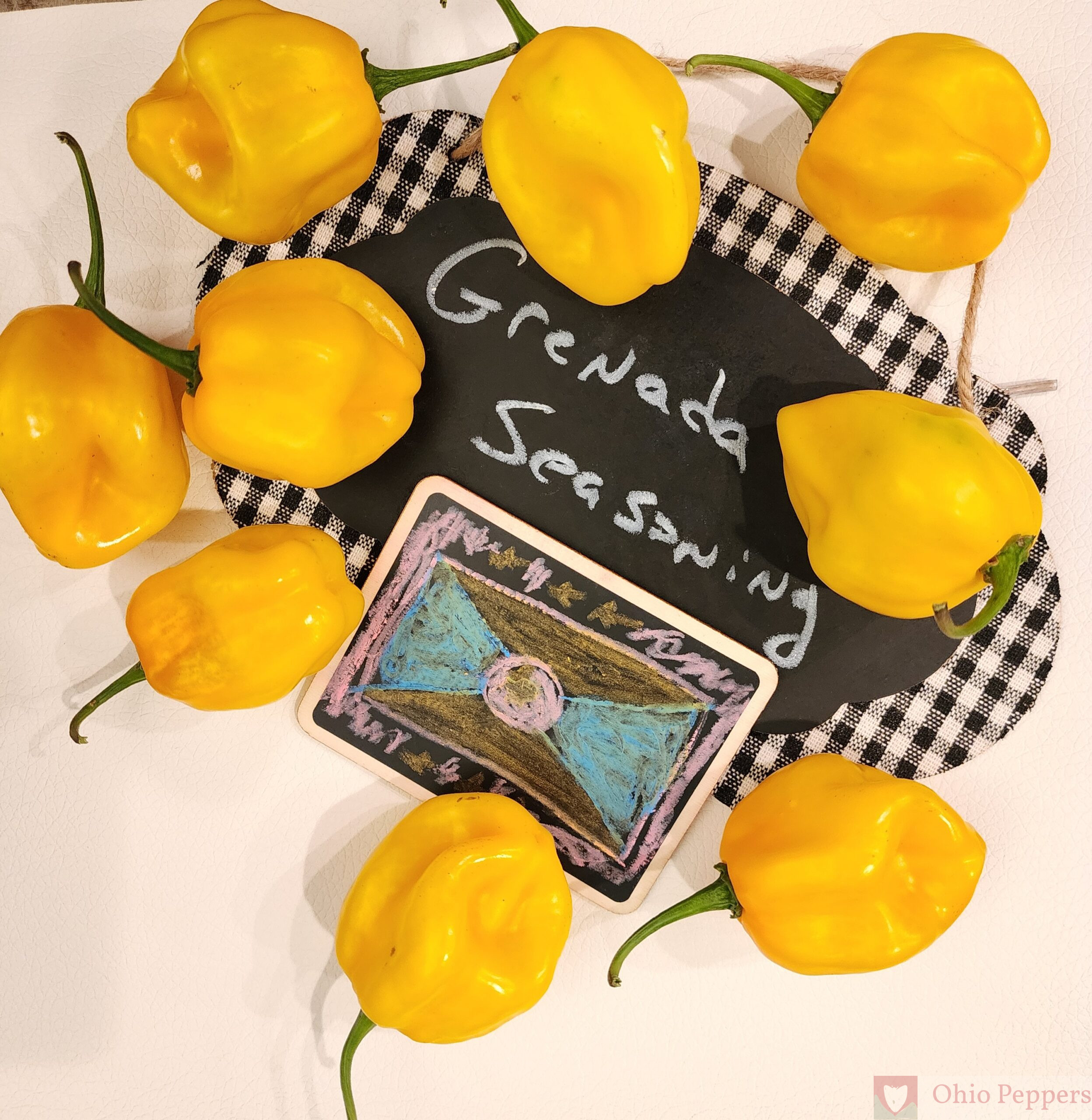


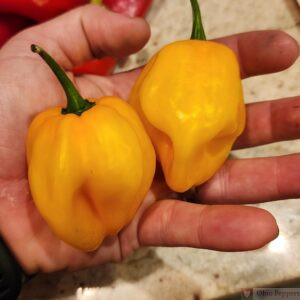

Grenada Seasoning: A Tale of Two Flavors
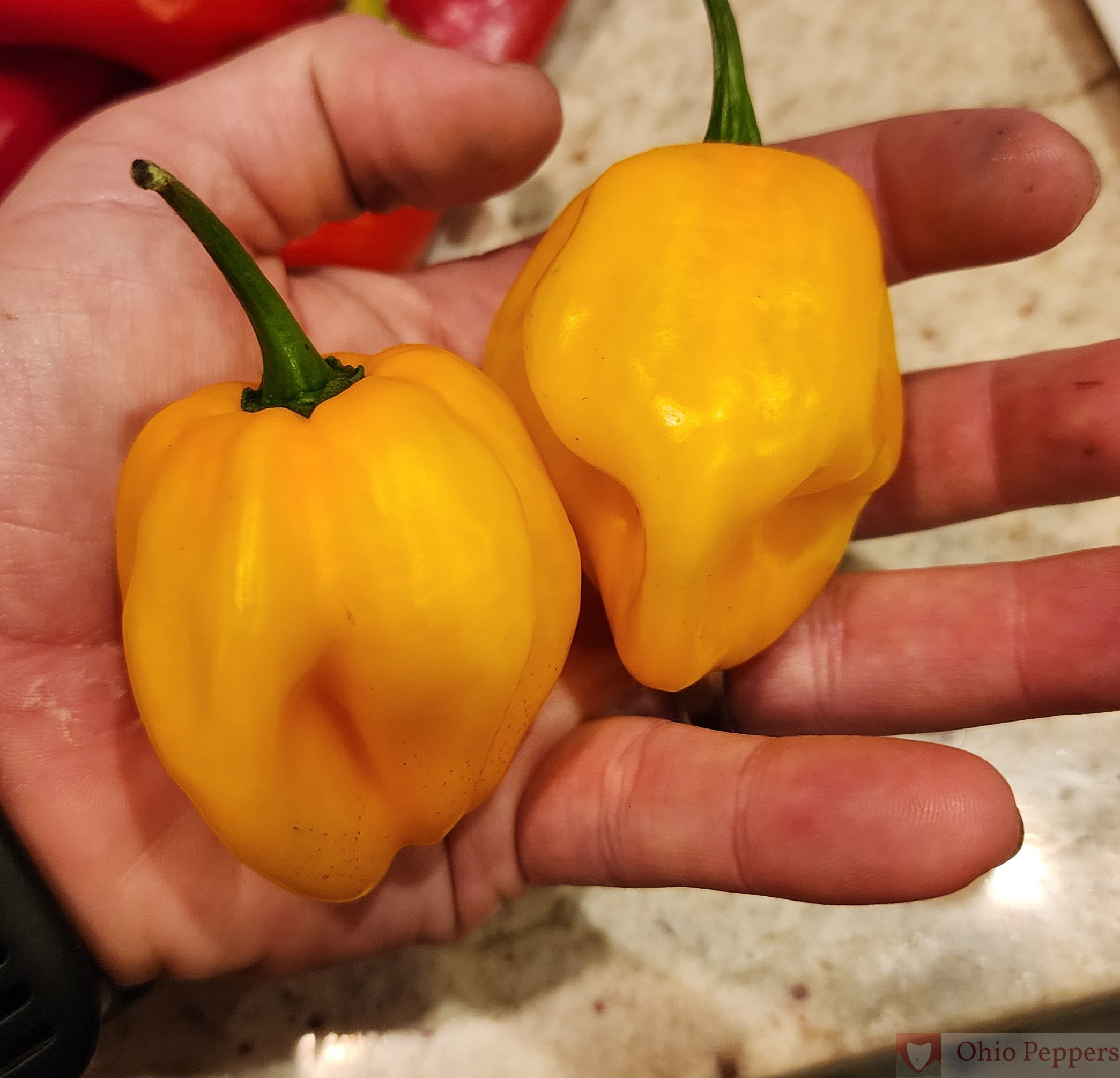
This pepper is a unique variety that offers a dual experience: a sweet outer flesh coupled with a spicier core. Unlike the one-note heat of the Cayenne or the mildness of the Bell Pepper, the G. Seasoning pepper provides a complex flavor profile that makes it versatile in the kitchen.
Scoville Heat Units (SHU)
While the Grenada Seasoning pepper is often referenced as being 15,000 SHU, don’t let that number fool you. The outer part of the fruit is surprisingly sweet, with virtually no heat. The pith/placental material holding the seeds is hotter – however in my “expert” opinion the heat barely reaches Jalapeno heat, not the 15K as claimed. This pepper is a C. chinense, same species as habanero. It has a lot of the fruity undertones that people love about the habanero but without the elevated heat.
Culinary Uses
This pepper is highly versatile in the kitchen. Its sweet outer layer can be used in salads, salsas, or as a garnish, while the spicier core is ideal for adding a kick to sauces, stews, and marinades. This dual nature makes it a unique addition to your culinary repertoire, unlike the straightforward heat of the Thai Chili.
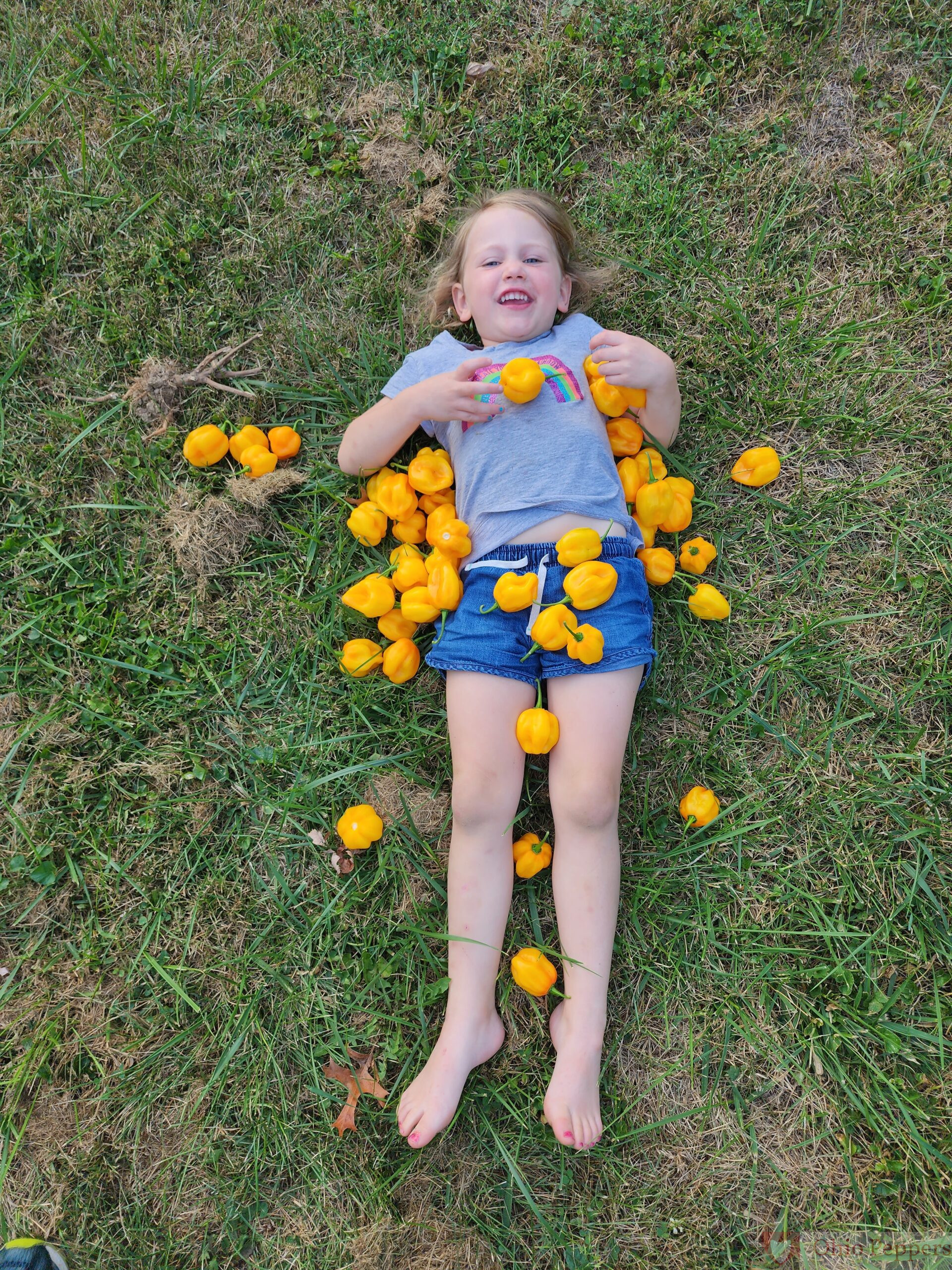
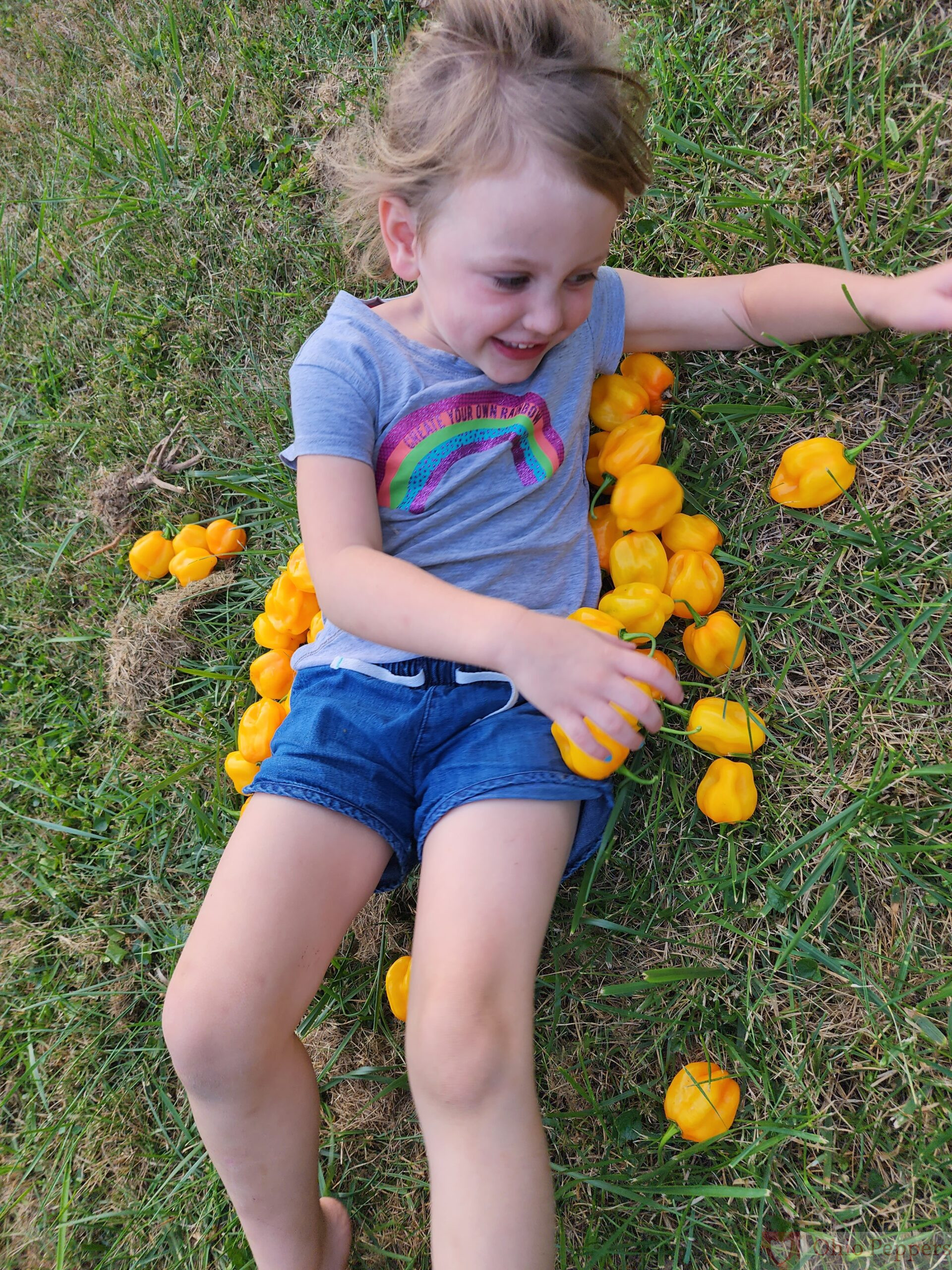
Tropical with notes of citrus allows the flavor of a C. chinense (like habanero) to shine in a salsa that can be appreciated by those that are more heat adverse. As a personal aside: Our 3 year old eats the peppers (outside, not the core!) as a sweet snack. This is a kid that does not eat pepperoni on pizza because it is too spicy!
Growing Requirements
Similar to the Poblano, growing Grenada Seasoning pepper seeds require a warm climate and well-drained soil for optimal growth. It’s a relatively easy-to-grow variety, making it suitable for both novice and experienced gardeners.



Reviews
There are no reviews yet